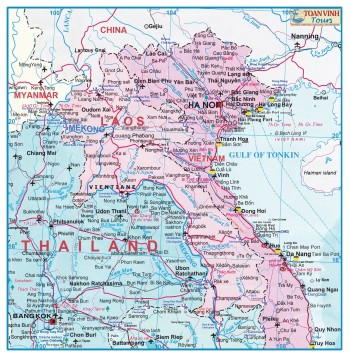
 The People's Democratic Republic of Laos is located in the centre of Indochina, sharing borders with China to the north, Myanmar to the northwest, Thailand to the west, Cambodia to the south, and Vietnam to the east.
With an area of 236,800 square kilometres. Around 70% of its terrain is mountainous, reaching a maximum elevation of 2,820 m in Xieng Khouang province. The landscapes of northern Laos and the regions adjacent to Vietnam in particular are dominated by hills.
The Mekong river is the main geographical feature in the west and, forms a natural border with Thailand in some areas. The Mekong flows through nearly 1,900 km of Laos territory and shapes much of the lifestyle of the people of Laos. In the south the Mekong reaches a breadth of 14 km, creating an area with thousands of islands.
Time:
Time in Laos is 7 hours ahead of Greenwich Mean Time (GMT* 7).
Climate:
Laos enjoys a tropical climate with two distinct seasons – the rainy season from the beginning of May to the end of September and the dry season from October through to April. The yearly average temperature is about 28°C, rising to a maximum of 38°C in April and May. In Vientiane minimum temperatures of 19°C are to be expected in January. In mountainous areas, however, temperatures drop to 14-15°C during the winter months, and in cold nights easily reach the freezing point.
The average precipitation is highest in southern Laos, where the Annamite mountains receive over 3000mm annually. In Vientiane rainfall is about 1500-2000mm, and in the northern provinces only 1000-1500mm.
Flora and Fauna :
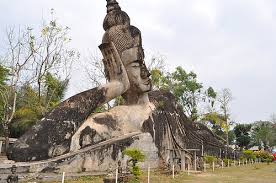 Loas has one of the most pristine Ecologies in South East Asia. An estimated half of its woodlands consist of primary forest, in particular the tropical rain forest. Unlike the vegetation in the bored climate of northern Europe and the United States, tropical rain forest is composed of three vegetative layers. The top layer is dominated by single-trunked, high-reaching trees, so-called dipterocarps. The middle canopy consists of hardwood such as teak. Beneath, small trees, grasses, and sometimes bamboo can be found.
In addition to a fascinating vegetation, Laos plays host to a diverse animal kingdom. Several exotic mammals are endemic such as leopard cats, Javan mongoose, goat-antelopes, rare species of gibbons and langurs, Malayan sun bear, Asiatic black bear, gaur and others. The discovery of the Saola Ox, a breed of deer-antelope, in Vietnam a few years ago caused a sensation. This extremely rare animal inhabits the eastern border regions of Laos, too. And these remote areas probably still hide other unknown species.
In the south of Laos, near Khong Island, Irrawaddy dolphins inhabit the Mekong river. While many species of wildlife are shy and can rarely be seen, spectators will generally be able to spot the dolphins in spring when the water level of the Mekong is lowest. Laos is also rich in resident and migrating birds. One of the more notable ones is the rare Green Peafowl.
Language:
Lao language is the national language. Others languages used are French, English, Chinese, Thai and Vietnamese.
Religion:
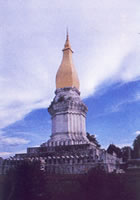
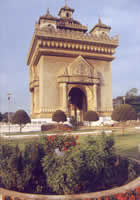 Buddhism first appeared in Laos during the eighth century A.D as shown by both the Buddha image and the stone inscription found at Ban Talat near Vientiane, now exhibited at the Museum of Ho Prakeo. After the foundation of the unified Kingdom of Lane Xang, King FaNgum (14th century) declared Buddhism as the state religion and urged the people to abandon animism or other beliefs such as the cult of spirits. His policy meant to develop the Lao culture based on a common faith: the Theravada Buddhism is the professes religion of about 90% of Lao people. Buddhism is an inherent feature of daily life and casts a strong influence on Lao society. Lao woman can be seen each morning giving alms to monk for at least a short time in their lives.
Traditionally they spent three months during the rainy season in a Vat - a Buddhist temple. But nowadays most men curtail their stay to one or two wee







Login to Leave a Comment